

30 Years on the Cobbles: A 1996 Retrospective From Flanders & Paris-Roubaix

To mark our 30th year of business in 2026, we have dived back into the Prendas archive and into the long history of the cobbled Classics to revisit the races that took place in the year it all began for Prendas.
For followers of the sport, 1996 sits in a very particular place. The biggest races in northern Europe, the Tour of Flanders and Paris–Roubaix, were already steeped in tradition, but the riders and teams of that moment gave them a modern edge. It was a time when team identity was instantly recognisable, tactics were evolving, and the equipment was just beginning to change.
In May 1996, Mick Tarrant founded Prendas Ciclismo with a simple observation:
“I realised I had a deeper passion for what the riders were wearing than the bikes they were riding.”
That idea took shape in the same season that delivered one of the most memorable cobbled campaigns of the decade.

The 1996 Tour of Flanders: Pressure, Position, and Timing
The 1996 edition of the Tour of Flanders covered close to 270 kilometres across the Flemish Ardennes, linking narrow farm roads with steep cobbled climbs that have defined the race for generations.
By the mid 1990s, Flanders had already built its reputation on climbs like the Oude Kwaremont and the Kapelmuur. These were not long ascents, but they came in relentless sequence, each one forcing the race into smaller and smaller groups.
Victory in 1996 went to Michele Bartoli, who timed his move with precision and committed fully when the race opened up. His win also reflected a broader shift at the time, with Italian riders and teams beginning to assert themselves in races long dominated by Belgian specialists.
For Johan Museeuw, widely seen as the natural heir to the great Flemish hard men, the race turned on a moment of bad luck. A mechanical problem before the Kapelmuur forced him to chase just as the decisive attacks were forming. He recovered strongly to take a podium place, but the chance to win had slipped away.
Flanders is often described as a race of strength, but it is just as much about position and timing. In 1996, those margins were enough to decide everything.
Museeuw’s own view of the race underlines its importance:
“Winning the Tour of Flanders once will get you a place in eternity in the cycling world over here.”
That sense of unfinished business would carry directly into the following weekend.
The 1996 Paris Roubaix: When a Team Took Control
If Flanders exposed weakness, the 1996 Paris–Roubaix showed what complete control looked like.
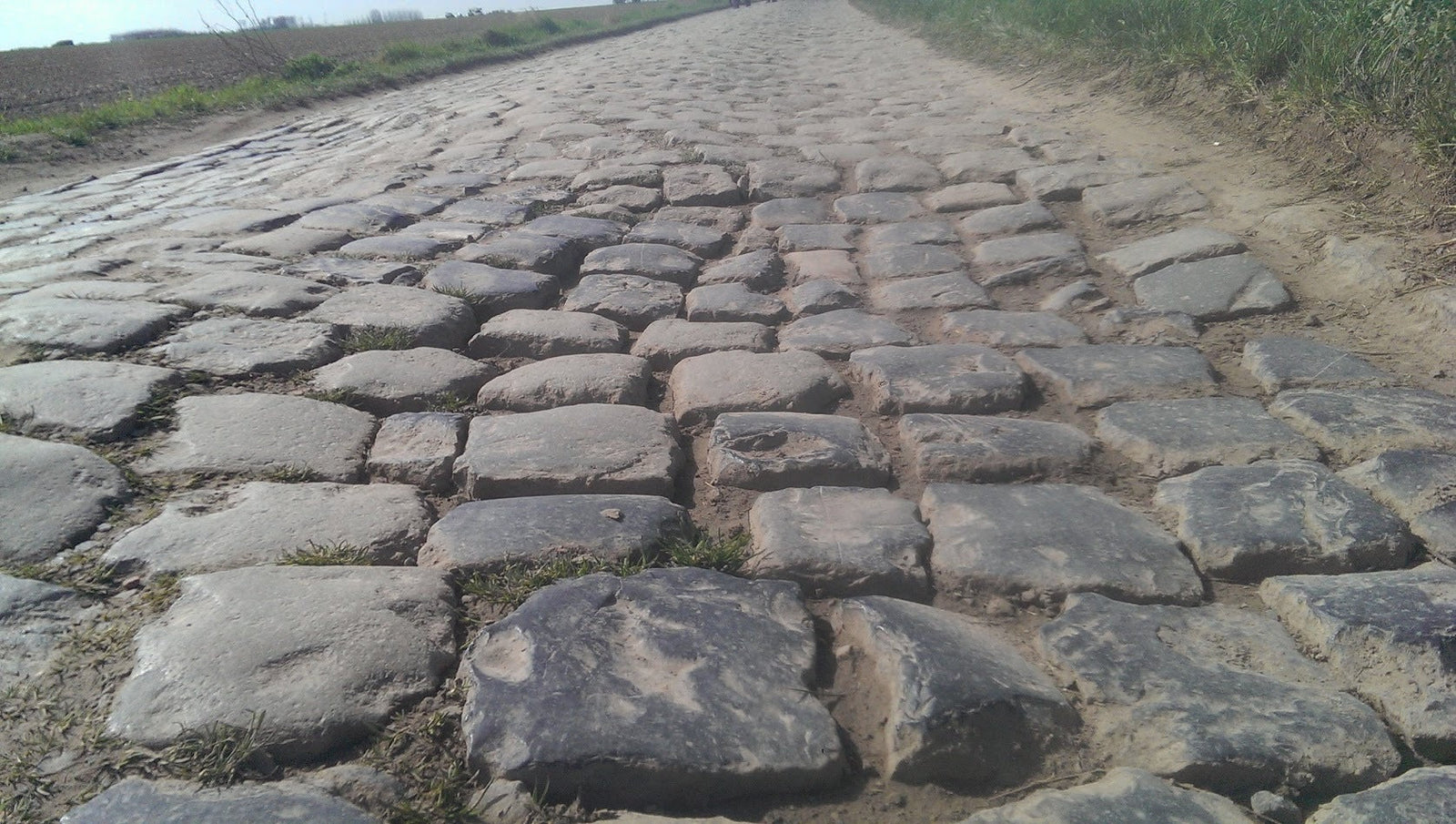
Often called the Hell of the North, Paris Roubaix has always been defined by its cobbled sectors, long stretches of uneven stone that cut through farmland and forest. By the 1990s, sections such as the Trouée d'Arenberg had become central to the race, places where positioning, nerve, and equipment choice could make or break a rider’s chances.
In 1996, the race covered more than 260 kilometres and was ridden at a pace that reflected how aggressively teams were beginning to approach the Classics.
The defining move came well before the finish. Riders from Mapei–GB forced a split that only they could sustain. At the front were Johan Museeuw, Gianluca Bortolami, and Andrea Tafi, with teammates behind disrupting any organised chase.
This was not just a breakaway. It was a demonstration of how a team could shape a race from distance.
As they approached the velodrome in Roubaix, the outcome was settled internally. A call from Giorgio Squinzi confirmed that Museeuw would take the win. The three riders crossed the line together, one of the clearest examples of team dominance the race has ever seen.
Despite the controlled finish, the demands of Paris Roubaix remained unchanged. Riders adapted their equipment to cope with the cobbles, adjusting tyre pressure, frame choice, and even crank length to reduce the risk of mechanical failure on the roughest sectors.
It was a race that still rewarded resilience above all else, even in the face of tactical perfection.
The Teams Behind the Races
The mid 1990s marked a shift in how professional cycling teams operated, and the Classics were where that change became most visible.
Mapei–GB stood at the centre of that shift. Backed by significant investment and built around a deep roster, the team approached races with a level of organisation that set a new standard. Riders such as Franco Ballerini and Andrea Tafi gave them strength across every type of terrain found in the northern Classics.
Alongside them, teams like MG–Technogym, which supported Bartoli in Flanders, showed how Italian squads were adapting to the demands of races traditionally dominated by Belgian riders.
Elsewhere, established names such as Rabobank and Lotto–Isoglass continued to shape the character of the peloton, each with its own identity and approach.
This mix of tradition and evolution is part of what made 1996 such a compelling year.

Museeuw winning Tour of Flanders in 1995
The Look of the 1990s Peloton
Cycling in the 1990s had a visual clarity that is hard to replicate.
The kit worn by Mapei–GB has become one of the defining designs of the era. The cube pattern was bold, distinctive, and instantly recognisable in a crowded race.
It also reflected a moment when team sponsors embraced visibility in a direct and unapologetic way. Jerseys were not subtle, and that was exactly the point.
For Prendas, this was the environment we entered. The connection between racing and clothing was clear, and it shaped the direction we took from the beginning.
From Gravel Lane to a Wider Audience
In 1996, Prendas operated from a small unit on Gravel Lane in Poole. The business was simple, hands on, and driven by a clear sense of purpose.
As Mick explained:
“Bicycle technology was advancing quickly, but clothing was often overlooked. We wanted to give it the attention it deserved.”
We began with Etxeondo and a focus on quality and authenticity. As demand grew, so did the ways we handled it, often improvising with the tools available at the time.
What mattered most was the connection to the sport and its history.
The Jerseys That Still Matter
While 1996 provides a strong reference point, the roots of Prendas reach further back into cycling history.
The Brooklyn cycling team jersey, worn by Roger De Vlaeminck, remains closely associated with success at Paris Roubaix. His performances helped define what it meant to master the cobbles.
The Z Team kit, linked to Greg LeMond, reflects a different period, when design began to move towards something more graphic and expressive.
These jerseys continue to resonate because they are tied to specific moments and riders. They carry stories as much as they carry colour.

Flanders and Roubaix: Two Sides of the Classics
The contrast between the Tour of Flanders and Paris–Roubaix remains central to the appeal of the Classics.
Flanders builds its challenge through repeated climbs, each one demanding an effort that accumulates over the course of the race.
Paris Roubaix stretches that effort across long sections of cobbles, where rhythm is constantly broken and concentration becomes as important as strength.
As Jacques Goddet once put it, “It is hell.”
That description still holds, and it helps explain why these races continue to define the sport.
Join the Celebration
As we mark 30 years in 2026, we are celebrating the link between racing and identity.
From the cobbles of Flanders to the roads of northern France, the riders of 1996 shaped a moment that still influences how the sport looks and feels today.
Whether it is the bold patterns of the 1990s or the classic designs that came before, these jerseys remain part of that story.
And they remain at the heart of Prendas.
Leave a comment
Comments will be approved before showing up.
Also in News and articles from Prendas Ciclismo


30 years on - The 1996 Ardennes Classics: Tactics, Grit and Iconic Retro Cycling Jerseys
Relive the 1996 Ardennes Classics. From Amstel Gold Race to Liège–Bastogne–Liège, discover the tactics, riders and retro cycling jerseys that defined an era.


The Pro’s Choice: 20% Off DMT, Shimano, and Mavic This Weekend
Step into the shoes of the pros this weekend at Prendas. Whether you’re chasing the knitted innovation of DMT as seen on the feet of Tadej Pogačar, the relentless precision of the Shimano S-Phyre, or the deep cycling heritage of Mavic, now is the time to upgrade. We’re offering a 20% discount across these three iconic brands to help you find that perfect connection to the pedals. From the cobbles of Flanders to your local Sunday club run, give your feet the WorldTour treatment they deserve.


The Clipless Revolution: How Greg LeMond and LOOK Cycle Changed Cycling Forever
Step back to cycling’s most pivotal era, when Greg LeMond and the La Vie Claire cycling team ushered in a new age of innovation. From the first clipless pedals to iconic Mondrian-inspired kit, discover the story, and ride the legacy.